Karhu
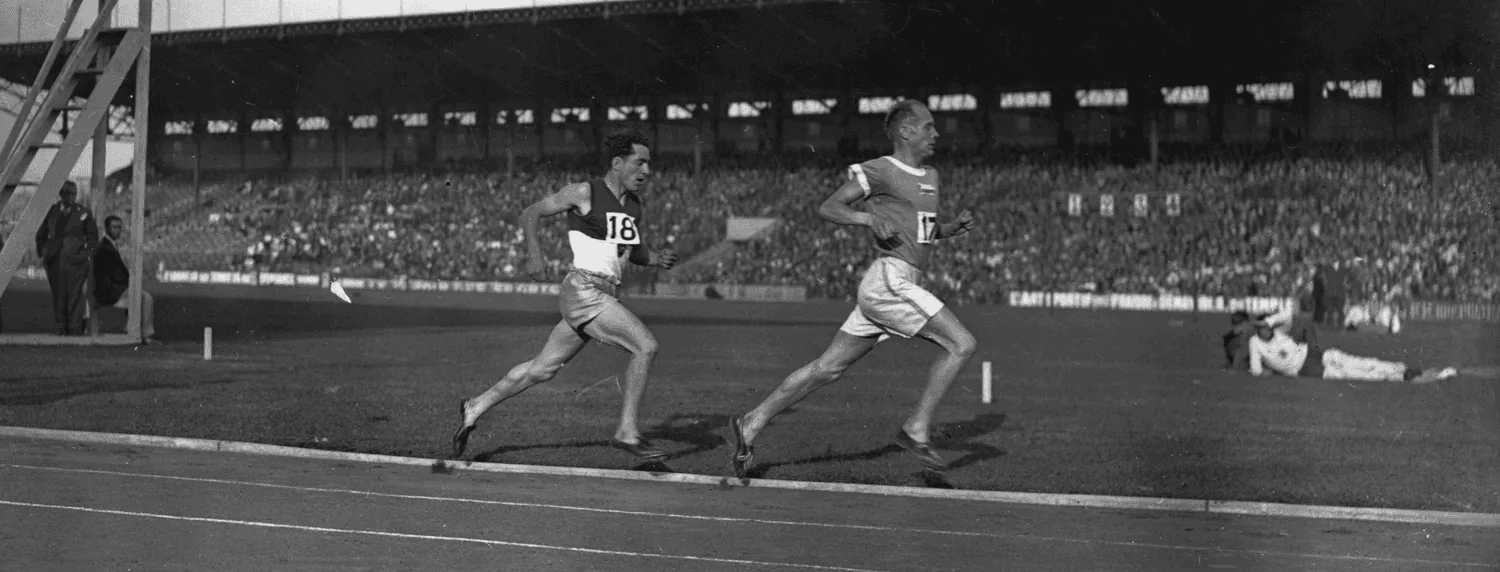
Founded in Finland in 1916, Karhu is one of the world's oldest running shoe brands. Long before Nike or Adidas dominated the market, Karhu was outfitting Olympic athletes and pioneering innovations — including the Air sole technology later sold off and reimagined as the iconic Nike swoosh. Today the brand sits in a unique position: rich in heritage, beloved by sneaker enthusiasts, yet largely under the radar. That tension between legacy and low visibility is exactly what makes it interesting.
Tools : Figma, Photoshop
The Challenge
Niche heritage brands occupy a strange corner of the internet. Their products are exceptional, their stories compelling, yet their digital presence rarely reflects either. They either mimic the mass-market playbook of larger competitors, losing what makes them distinct, or they lean so hard into minimalism that the experience feels cold and incomplete. Karhu is a perfect example. A brand with over a century of history, a fiercely loyal following, and a visual identity that stands apart but an online store that doesn't fully capitalise on any of it.
Goal
Design an e-commerce experience that felt native to Karhu's world balancing storytelling with commerce, heritage with modernity, and brand depth with usability. Not designing for scale and mass conversion like Nike or Adidas, but designing for depth. An online store that reflects Karhu's distinct identity, speaks to a culturally curious audience, and lets the product and story do the work.
Process
Competitive analysis of both mass-market and niche sportswear brands
User flow mapping across browsing, product discovery, and checkout
Wireframing key screens and interaction patterns
High-fidelity UI carrying Karhu's visual language through every touchpoint
Design Decisions
The visual language was rooted in Karhu's existing brand DNA: bold typography, a high-contrast yellow and black palette, and a tone of voice that leans into heritage without being nostalgic. The goal was to carry that identity consistently across every screen, so the experience feels like an extension of the brand rather than a generic store with a logo dropped in. Editorial moments like the "Where Heritage Meets Innovation" banner and the "The Proof Writes Itself" section were treated as breathing room giving the user a reason to slow down and connect with the brand before making a purchase decision.
A competitive analysis of both mass-market giants and niche sportswear brands revealed a clear pattern: Nike and Adidas optimise every interaction for conversion, flattening the experience into a funnel. Niche brands swing the opposite way prioritising editorial depth at the cost of usability, leaving users lost in story with no clear path to purchase. Karhu needed a third path. One that treated commerce and storytelling as the same thing, not competing priorities.
User flow mapping focused on three critical moments: how a user discovers a product, how they move from curiosity to intent, and how the checkout experience maintains the brand feeling rather than dropping into a generic template. These moments became the backbone of every design decision. Wireframing started with structure before style establishing information hierarchy, navigation logic, and product discovery patterns before applying any of Karhu's visual language. This ensured the experience worked on a functional level first.
UX structure
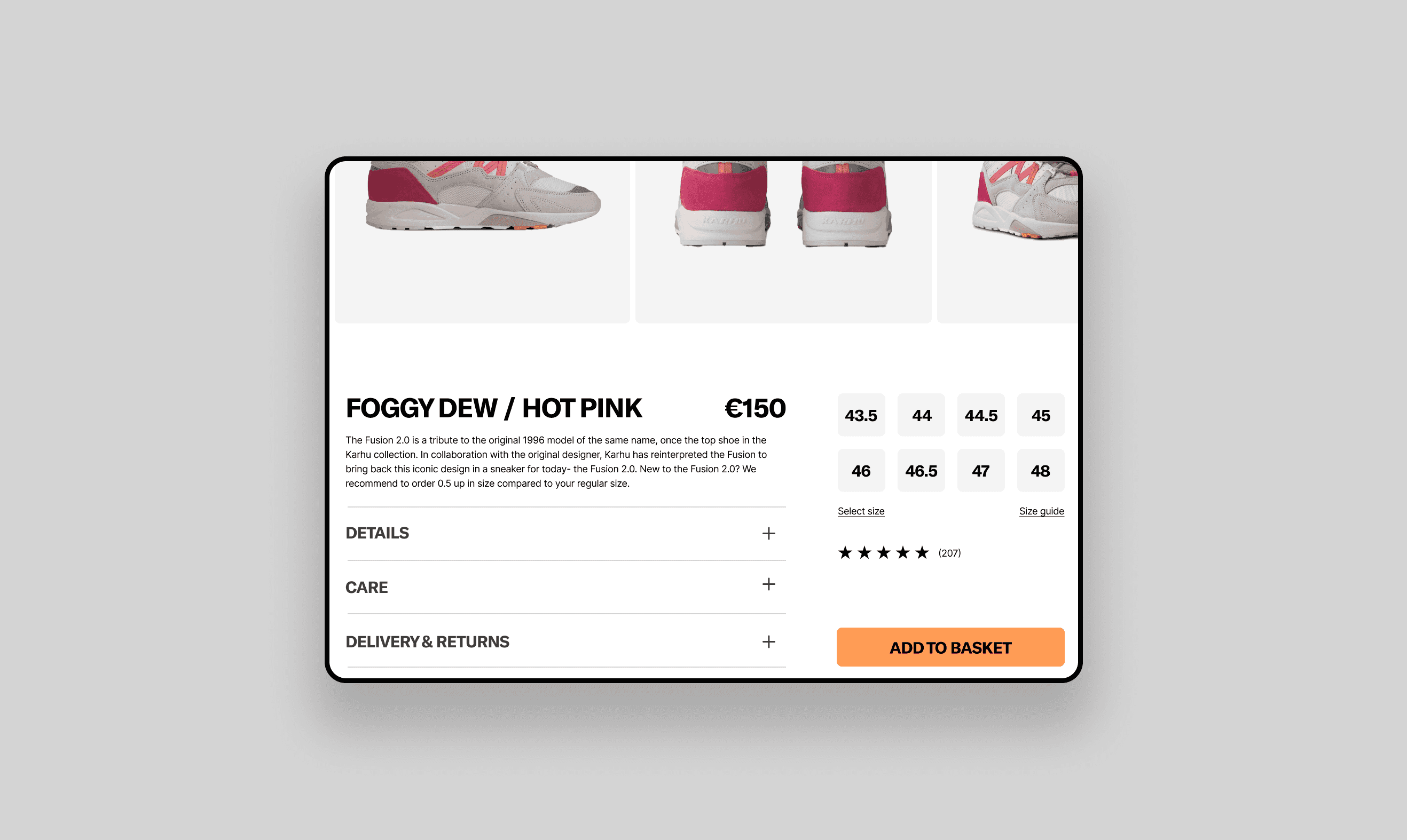
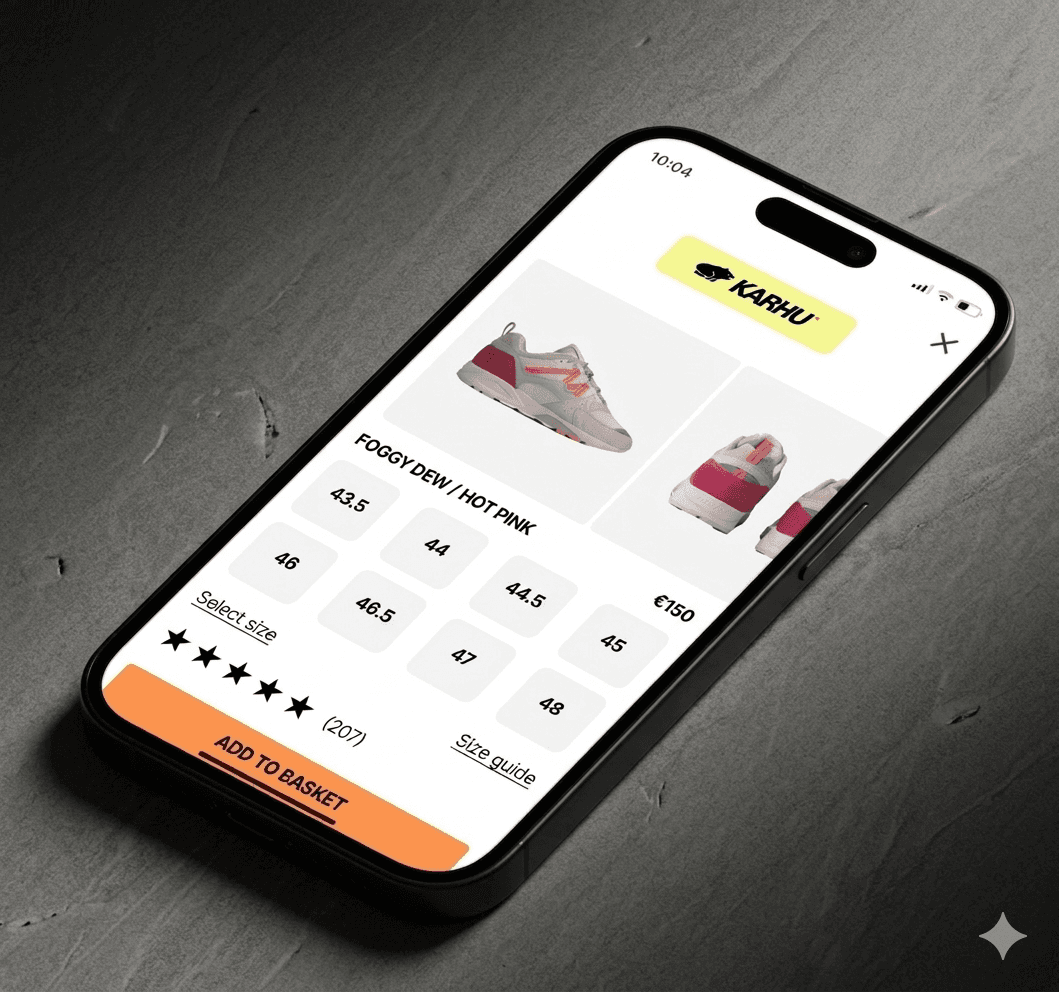
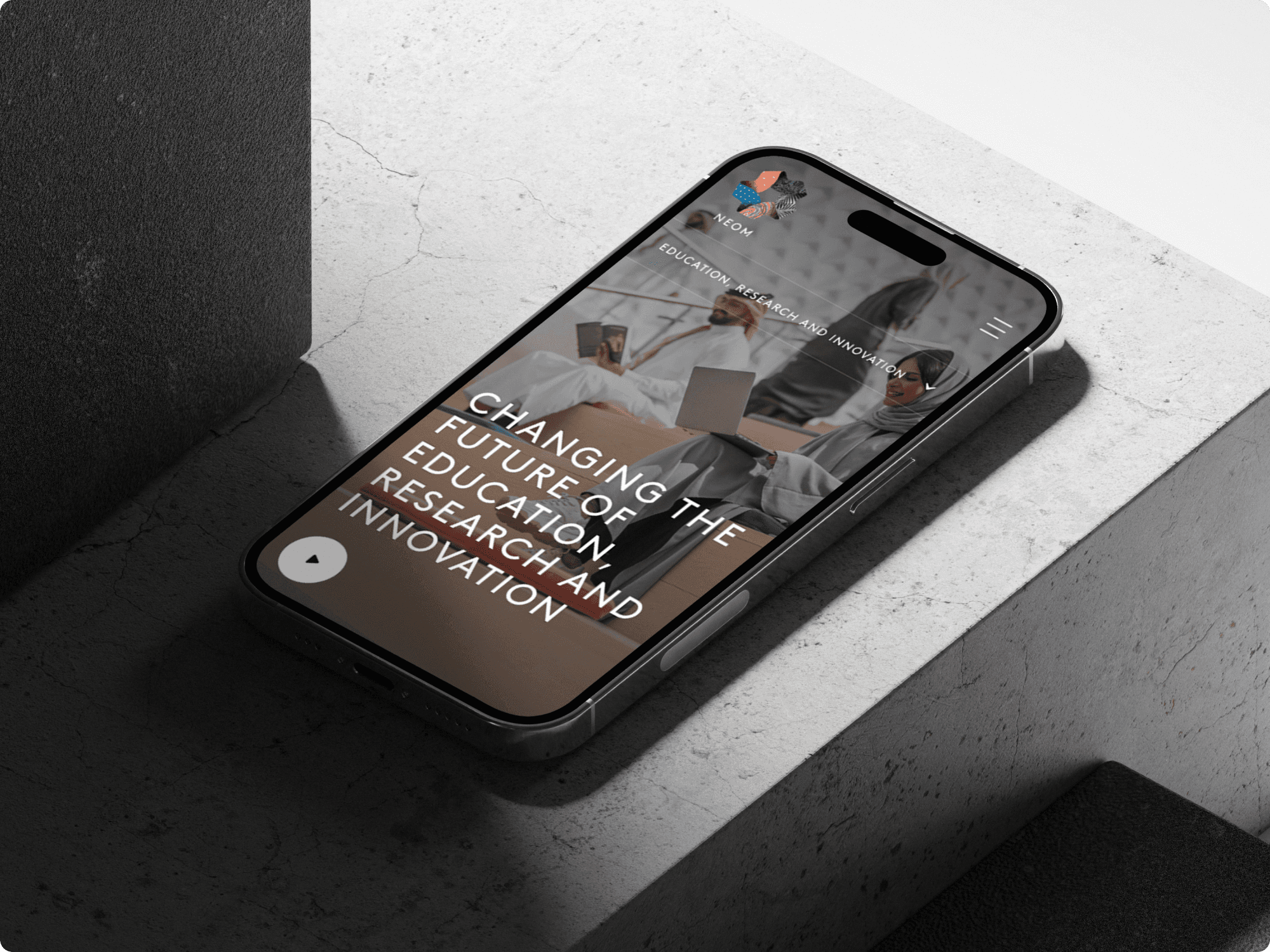
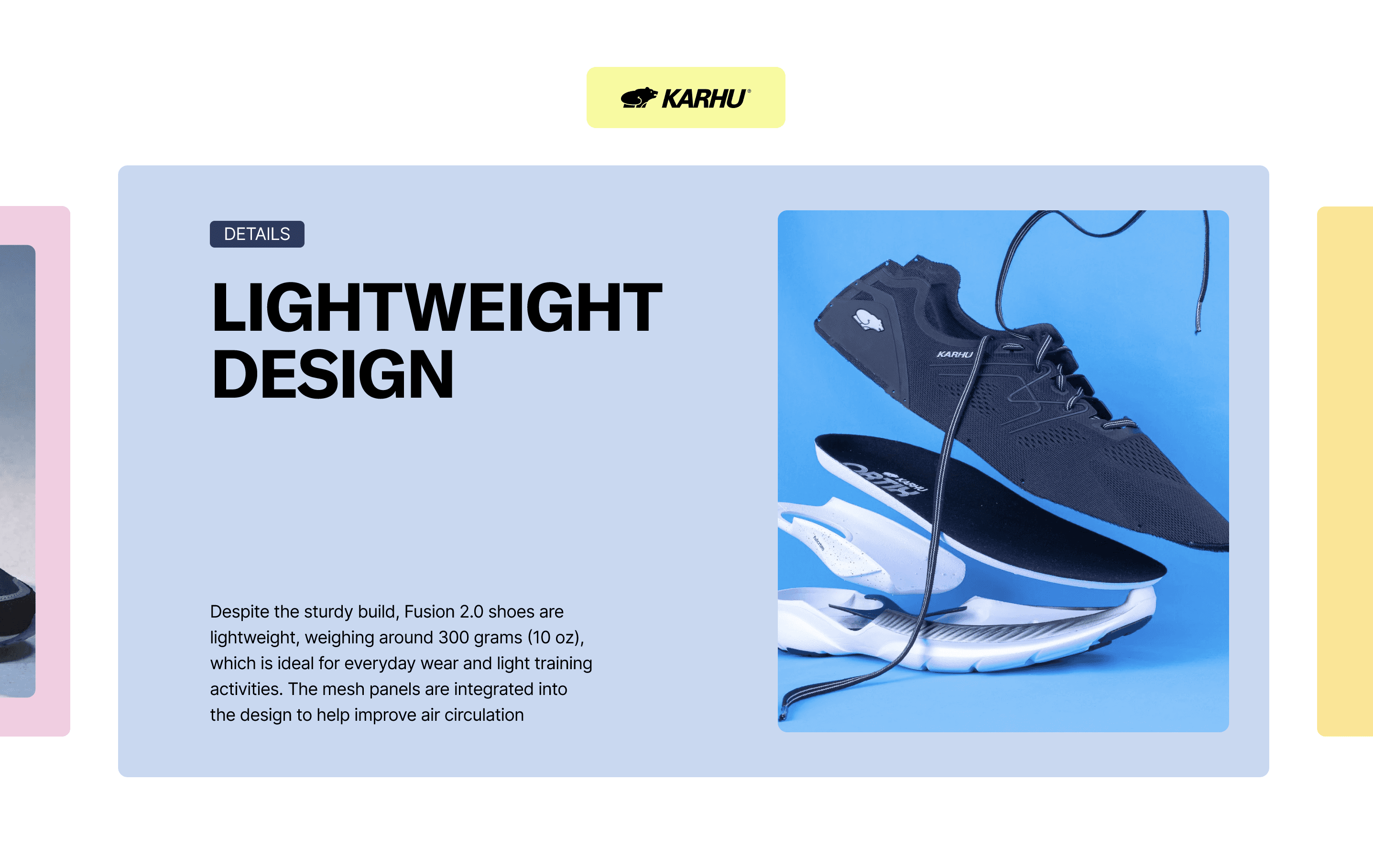
The core shopping flow was designed to reduce friction without stripping out personality. The collection page uses a clean grid with minimal filtering, keeping the focus on the product. The product detail page layers information progressively — imagery first, then colourway selection, then specs and care details so it works for both the casual browser and the detail-oriented buyer. Mobile was treated as a first-class experience throughout, with the same editorial weight carried across breakpoints rather than simplified down to a stripped version.
Prototype & scope
The project was taken to high-fidelity across desktop and mobile, with three interactive flows built out in Figma covering the homepage, collection browsing, and product detail. Interactions and component states were designed to reflect a realistic production experience including hover states, colourway switching, and accordion details on the product page.