Wavin Orbia
Global Platform
At Wavin we focused on streamlining B2B Specification: Redesigning Wavin’s Global Low-Noise Drainage Experience and translating heavy technical civil engineering data into intuitive, high-converting digital tools for architects and MEP specifiers across 80+ countries.
Company : Wavin, Orbia
Tools : Figma, Maze, Hubspot, Bynder
Project overview
Wavin is a global giant in commercial water management. The Wavin AS+ system is a highly engineered sound-insulating pipe that requires architects and plumbing engineers to perform incredibly dense acoustic calculations (e.g., structure-borne vs. airborne noise parameters, EN/DIN regulatory standards).
Product pages were dense, text-heavy data repositories (wavin-as), while promotional marketing tracks (low-noise-drainage) felt disconnected, generic, and failed to drive users cleanly to the ultimate business goal: using the digital "Noise Checker" calculation tool and booking high-value technical consultations.
Goal
The Persona: MEP (Mechanical, Electrical, Plumbing) Engineers and Commercial Specifiers. They don't read websites like normal consumers; they hunt for specific data sheets, compliance regulations, and system compatibility metrics.
The Business Objective: Transition the platform from a static text catalog into a lead-generating engine that funnels complex enterprise users straight into high-value touchpoints (expert consultation forms and BIM digital modeling downloads).
Outcome
Bridging the gap between raw, highly dense technical engineering catalogs and high-level marketing acquisition landing pages into a single, seamless digital pipeline.
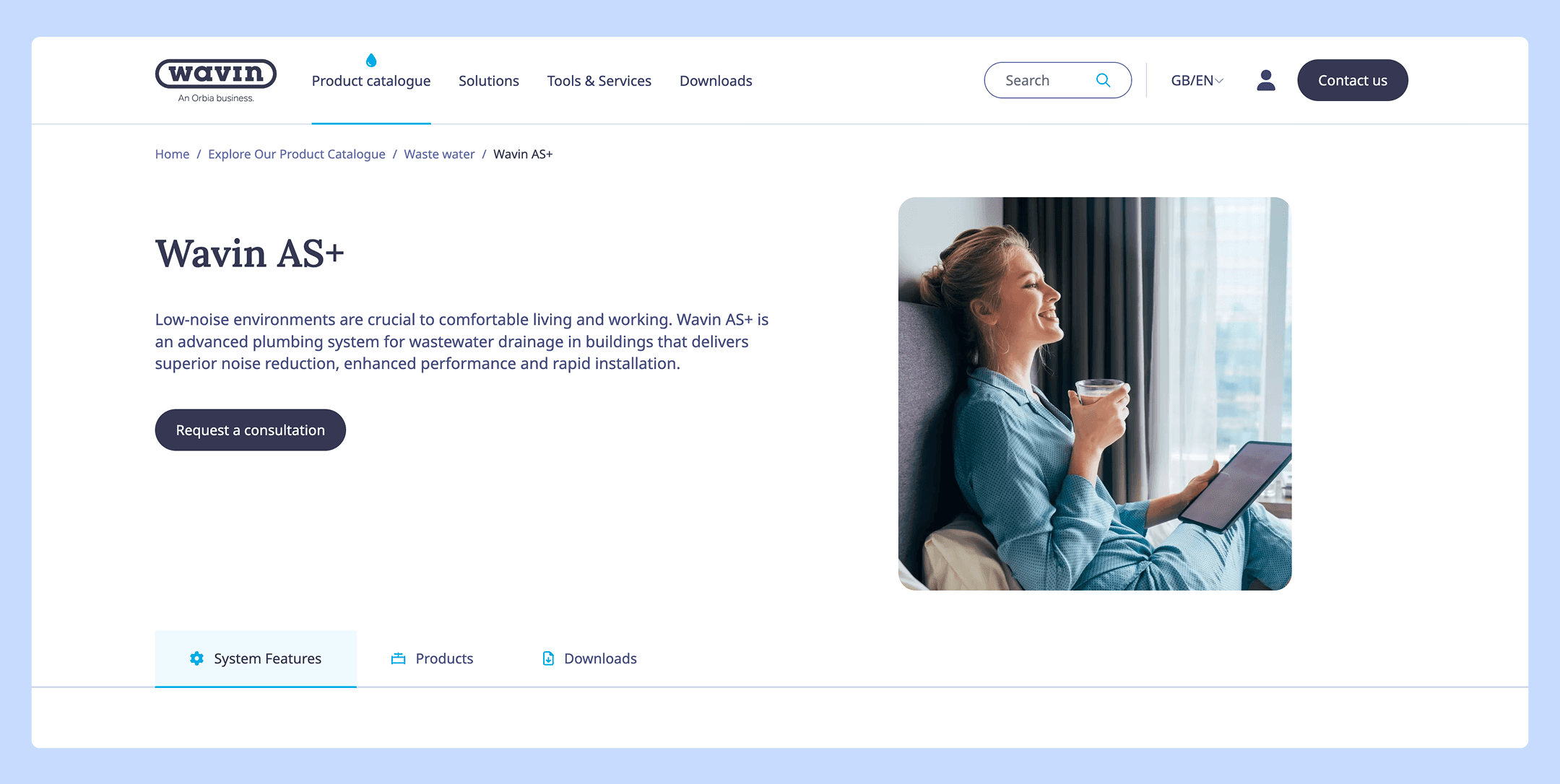
Strategic Context and the B2B Disconnect
Wavin is an international industry leader providing premium, highly-engineered water management solutions. Their signature commercial system, Wavin AS+, is an advanced acoustic low-noise pipe network designed to handle dense architectural and fluid dynamics requirements in large-scale modern mechanical installations.
The Friction point: Prior to the layout overhaul, the platform suffered from a critical experience disconnect. High-level promotional campaigns operated on completely isolated tracks, while deep technical specifications were relegated to raw, disconnected directories. This architectural segmentation forced professional specifiers to filter through unoptimized, text-heavy indexes, triggering severe conversion drop-offs before critical BIM data formats or design files could be secured.
Information Architecture: Taming System Parameter Complexity
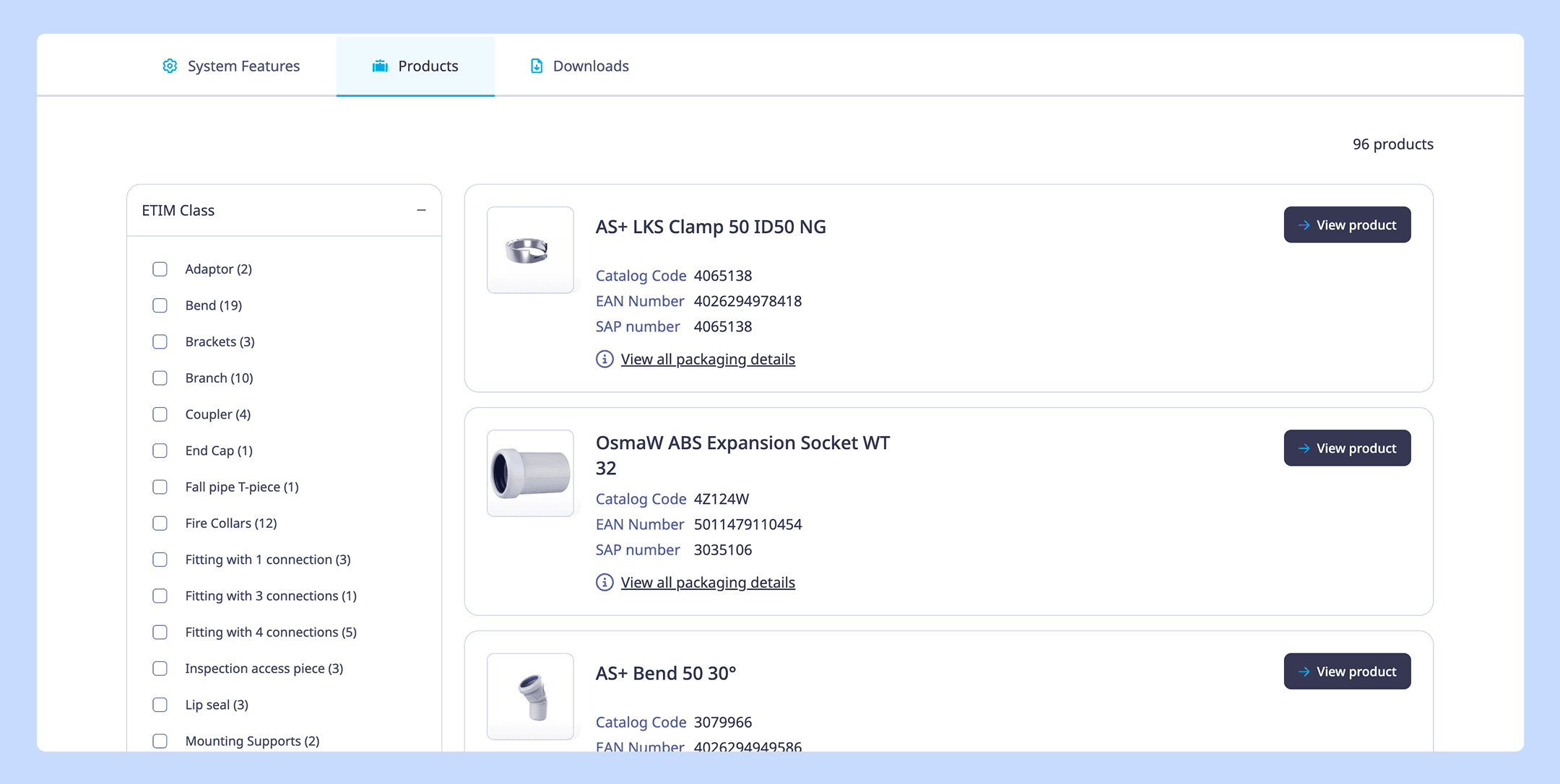
Unlike common ecommerce shoppers, professional mechanical, electrical, and plumbing (MEP) specifiers do not consume lifestyle marketing assets to make purchase choices. They optimize workflows purely around granular data parameters, demanding instantaneous access to catalog identifiers, international EAN matrices, internal SAP codes, and distinct categorical structures (bends, clips, adaptors).
The navigation layout was reconstructed to place multi-tiered filtering sidebars directly side-by-side with localized systems tabs. This interaction structure drastically minimized cognitive load, allowing architects to isolate precise mechanical variables across 96+ continuous items instantly without forcing user redirection or design breaks.
Unifying Marketing Narrative with Structural Triggers
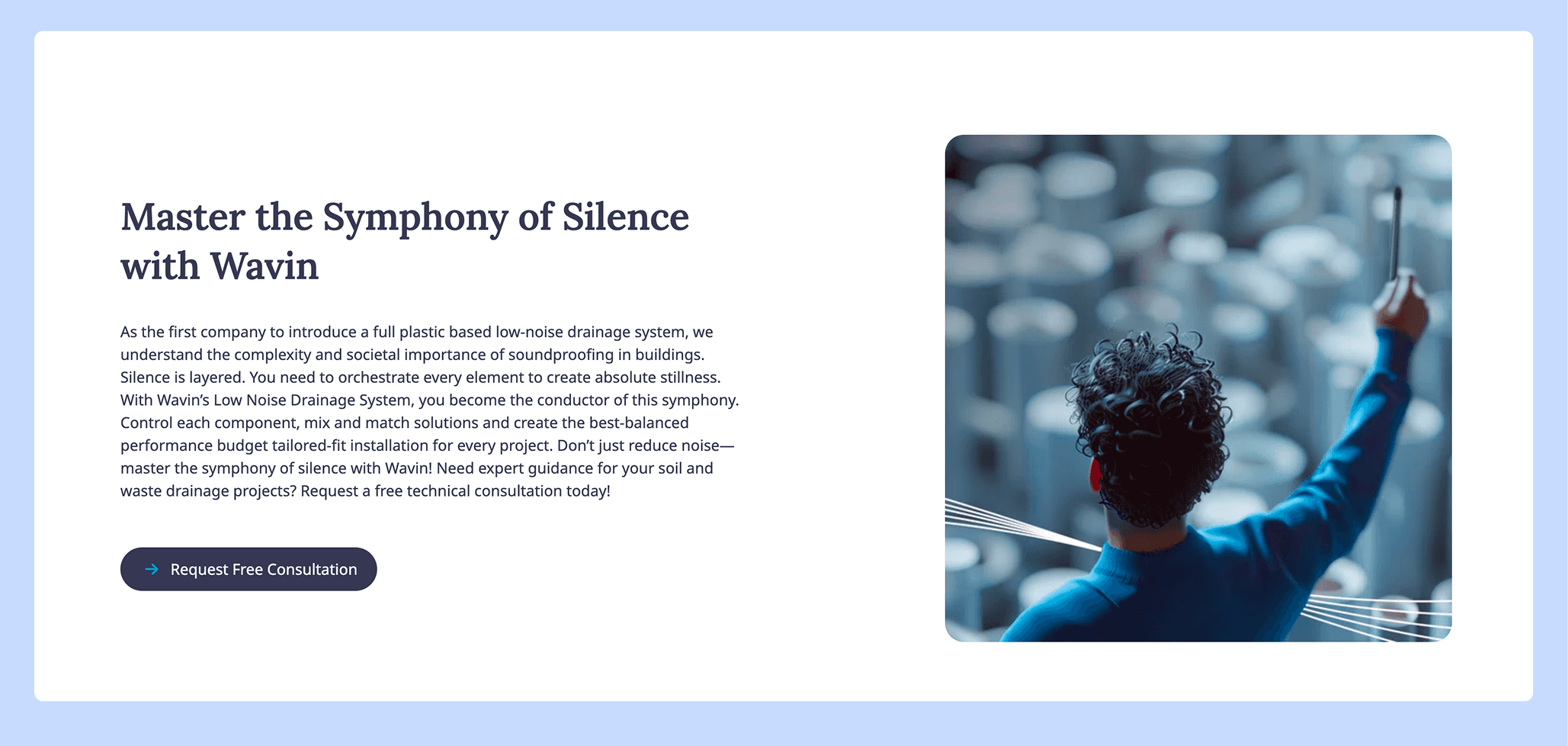
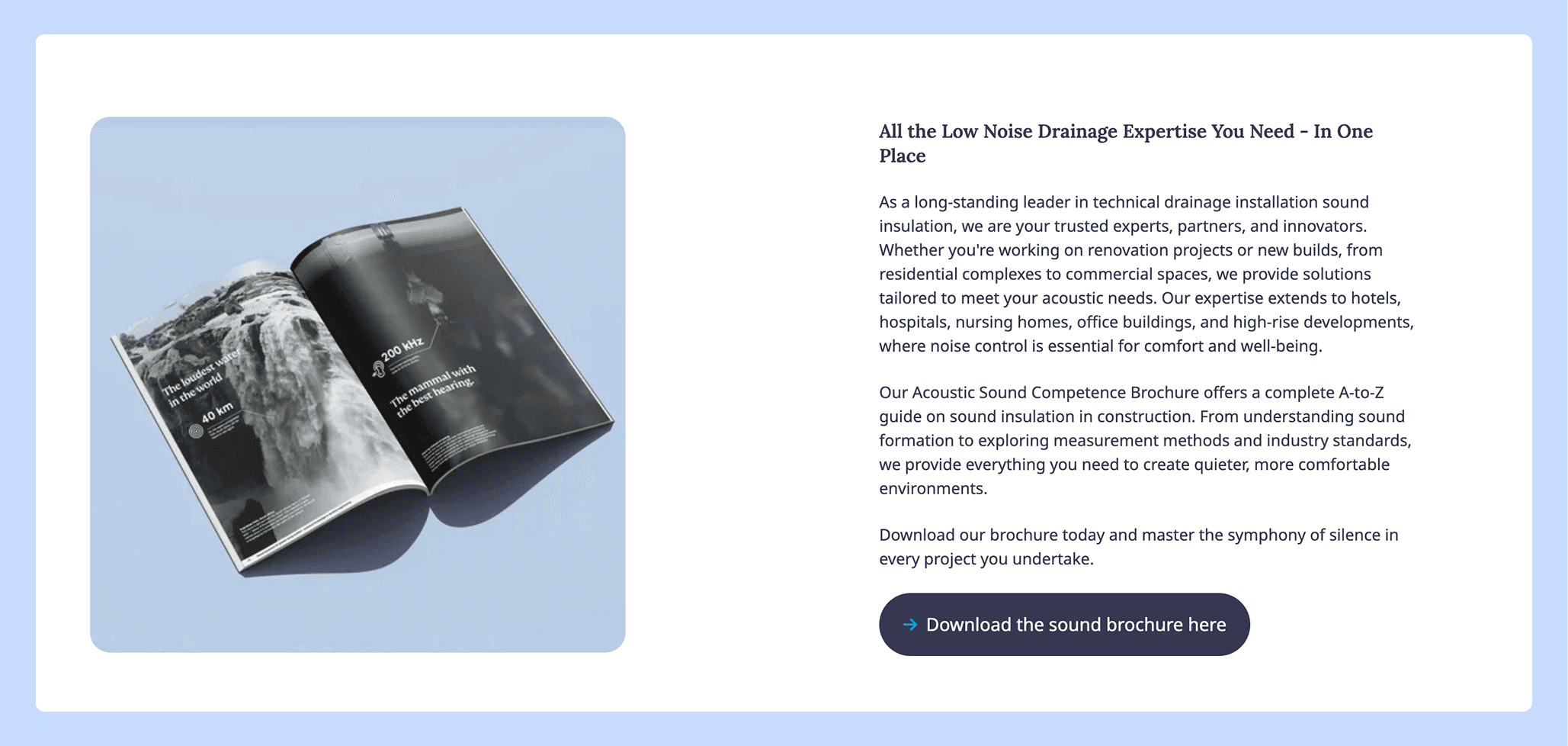
To accelerate enterprise business acquisition, commercial campaign tracks were repurposed from passive branding sites into high-performing lead generation pipelines. Editorial copy parameters like "Master the Symphony of Silence" were restructured from empty aesthetic statements into clear, logical paths directly addressing an engineer's core pain points: local building regulations and noise mitigation. The updated layout translates this narrative flow into immediate conversion mechanics, providing a seamless visual bridge that transitions an interested prospect effortlessly into an actionable "Request Free Consultation" business trigger.
Technical Engineering Trade-offs & Architecture Scaling
The Operational Bottleneck: Environmental acoustic standards and building infrastructure compliance parameters shift dramatically between international territories (e.g., rigid European DIN regulations vs. localized structures across Latin American and Asian zones). The backend engineering framework lacked a centralized, singular structural database model capable of outputting these regional variations dynamically without introducing extreme server latencies and rendering lag across field connections.
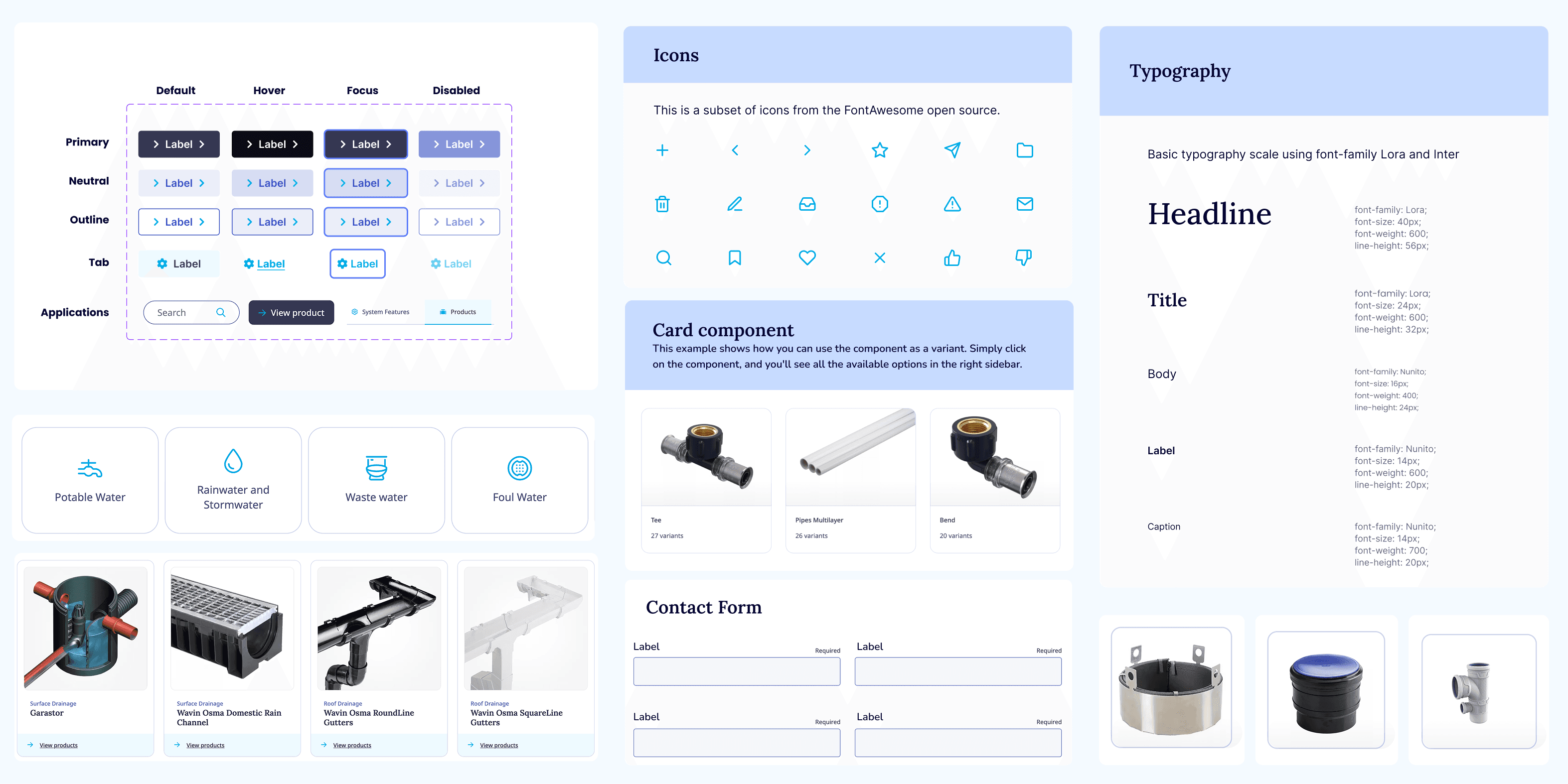
The System Compromise & Decision: Rather than forcing the development team to author dozens of distinct regional website forks or oversimplifying the data depth, I leveraged and expanded upon Wavin's global design system to build a modular, componentized content framework. By contributing to the global atomic component inventory, I helped standardize interactive parameters, including state-driven action items, dynamic search components, typography scales, and high-density product card matrices into scalable UI nodes. This approach enabled regional administrators to load unique localized regulatory variants programmatically via region-specific APIs, preserving immediate local accuracy while enforcing absolute visual alignment with the core platform code.
Responsive Platform Scaling & On-Site Performance
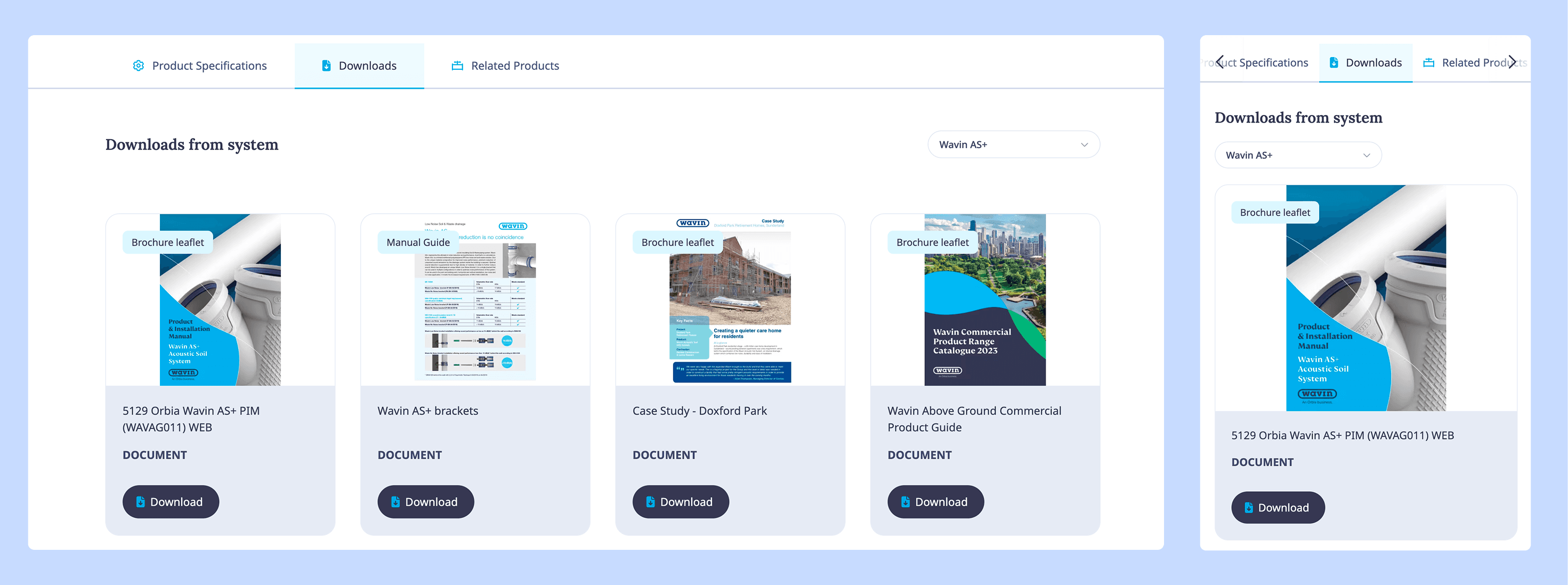
Enterprise platform design demands severe cross-device reliability. While specialized specifiers execute material selection and BIM model layouts on multi-monitor office workstations, field technicians and mechanical installers must reference assembly guides, bracket spacing matrices, and manual layouts directly on compact smartphone displays on live, poorly lit construction sites. The responsive layout pattern targets these viewport extremes, transforming wide-screen multi-card layouts into perfectly stacked, single-column document components to guarantee readability and performance under any field condition.
Measurable Business Outcomes & Product Value
Consolidated B2B Exploration Channels: Successfully unified raw technical catalogs and marketing campaign targets into a single, seamless user journey.
Global Engineering Velocity: Established a strict modular layout engine that eliminates custom interface rewrites, allowing immediate content configuration changes across 80+ distinct operating countries.
Accelerated Procurement Pipelines: Turned static, text-heavy data fields into contextual interactive prompts, reducing the time required for architects to secure high-value BIM packages and direct advisory booking help.
Absolute Accessibility and AA Compliance: Redesigned multi-column structural specification tables into fully flexible responsive data grids, guaranteeing data integrity for mobile on-site engineering crews.